


SMARTER POWER TO THE PEOPLE (some text hidden) --NONE--
By Jonathan Crouch
Introductionword count: 40
Nissan's Qashqai e-Power offers a rather different stepping stone from combustion power to EV motoring. It's an interesting confection, always an EV yet also always petrol-powered. Who needs a hybrid? Here, we look at the 2024-2025 versions of this model.
Modelsword count: 5
5dr SUV (1.5 e-POWER petrol)
Historyword count: 160
The Qashqai e-POWER was launched in 2022 as 'an electric car that you can fill up with petrol'. That sounds like a contradiction in terms doesn't it, but this powertrain really is difficult to classify. It can't be plugged in, but unlike a full-Hybrid, the engine never directly drives the wheels, its role instead being to power a front-mounted motor. The brand describes this powertrain as 'a bridging technology' that'll help transition customers to the full-EVs they'll have to live with in the future. But is it worth paying extra to get this Qashqai fitted out with it? This e-POWER engine was introduced a year after the mild hybrid versions of the J12-era MK3 Qashqai arrived in 2021. That J12 Qashqai range received a thorough update in mid-2024 and it's that updated model we look at here. In Autumn 2025, the e-POWER engineering was thoroughly updated. But it's the 2024-2025 versions of the Qashqai e-POWER that we look at here.
What You Getword count: 527
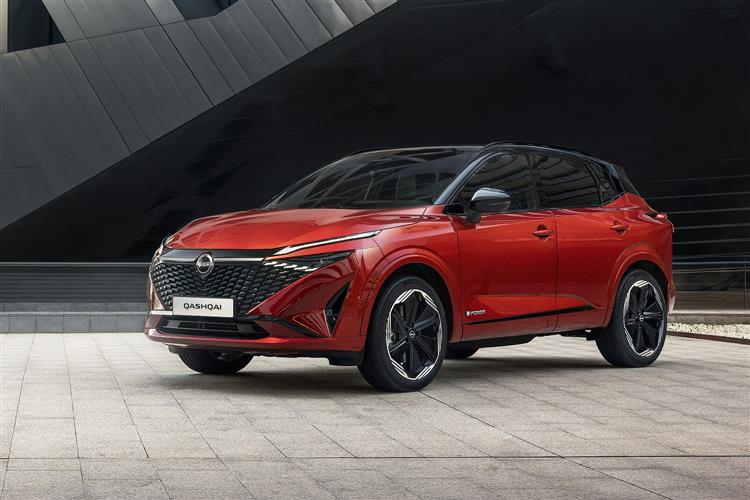
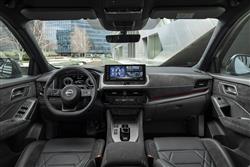
There's not much to differentiate this e-POWER Qashqai variant from its lesser stablemates. The eagle-eyed will notice the bespoke badgework, but that's about it visually. Facelifts are generally nip and tuck affairs: not the one that was introduced to this Qashqai in 2024. Nissan decided that this third generation Qashqai needed a completely new look to help it stand out in its crowded market. The update changes nearly all lay with the more aggressive front end and the larger grille, which gained finishing apparently inspired by the ancient armour scales of Japanese Samurai helmets. The front bumper was also different, the LED headlamps were restyled there was a sharper daytime running light signature. It's a lot harder to change interior architecture than it is to alter a few exterior panels and, sure enough, the updates were a lot more subtle inside. If you owned the original version of this J12-era Qashqai e-POWER and you decide to opt for a more expensive trim level with this updated model, you'll notice the smarter dash and centre console finishes, plus the plush faux leather upholstery, which can be partly quilted and features a dash and centre console with white-stitched Alcantara inserts. You might also pick up the fact that there's now a more advanced 64-colour ambient lighting set-up - and a better quality camera for the 'Around View Monitor' parking system with eight separate views. These include a useful 'T-Junction' view (helping you check for oncoming traffic at blind junctions); and an 'invisible hood' view, which generates an on-screen image of what the wheels are doing under the bonnet - Nissan says it's good for avoiding kerbs and positioning the vehicle in car washes. Bigger changes though, lie with the centre screen - and not just because it's 12.3-inches in size. The computer that runs it has become several times more powerful as part of the 2024 update, enabling a switch (above base trim) to Google's advanced Android Operating System. As before, most Qashqais of this era feature a 'digital combimeter' instrument screen (which replaced analogue gauges above base trim) - a display which as part of this update gained subtly altered graphics. What else? Well there are proper physical climate controls; better-spec models get a Head-up display; and build quality from the Sunderland plant feels pretty good, though there are some scratchy plastics lower down the dash and some of the trimming touches (such as the synthetic leather on the seats) don't feel particularly premium. The rear seat can take two adults comfortably, but three would be a squash. The hatch reveals a wide and deep boot that's the same size as a conventionally-engined Qashqai, and the lip's sensibly low. Nissan redesigned the suspension of this MK3 Qashqai, giving a useful loadspace capacity of up to 504-litres with all seats in place, enough to take up to seven carry-on cases. It's worth pointing out though, that this figure falls as you ascend the range - the 'N-Connecta' and 'Tekna' versions many customers choose have only 479-litres and this top 'Tekna+' trim, hobbled by the need to accommodate an upgraded BOSE audio system, sees that figure fall to just 455-litres.
To see the full road test text contact us on 0330 0020 227
Pictures (high res disabled)
.jpg)
|
.jpg)
|
.jpg)
| |||
.jpg)
|
.jpg)
|
.jpg)
| |||
.jpg)
|
.jpg)
|
.jpg)
| |||
.jpg)
|
|
Scoring (subset of scores)
Category: Hybrid, Plug-in, Electric & Hydrogen
| Performance | |
| Handling | |
| Comfort | |
| Space | |
| Styling, Build, Value, Equipment, Depreciation, Handling, Insurance and Total scores are available with our full data feed. | |

